


Bike Speed Sensor vs Cadence Sensor: Which Do You Need for Cycling in Oman?

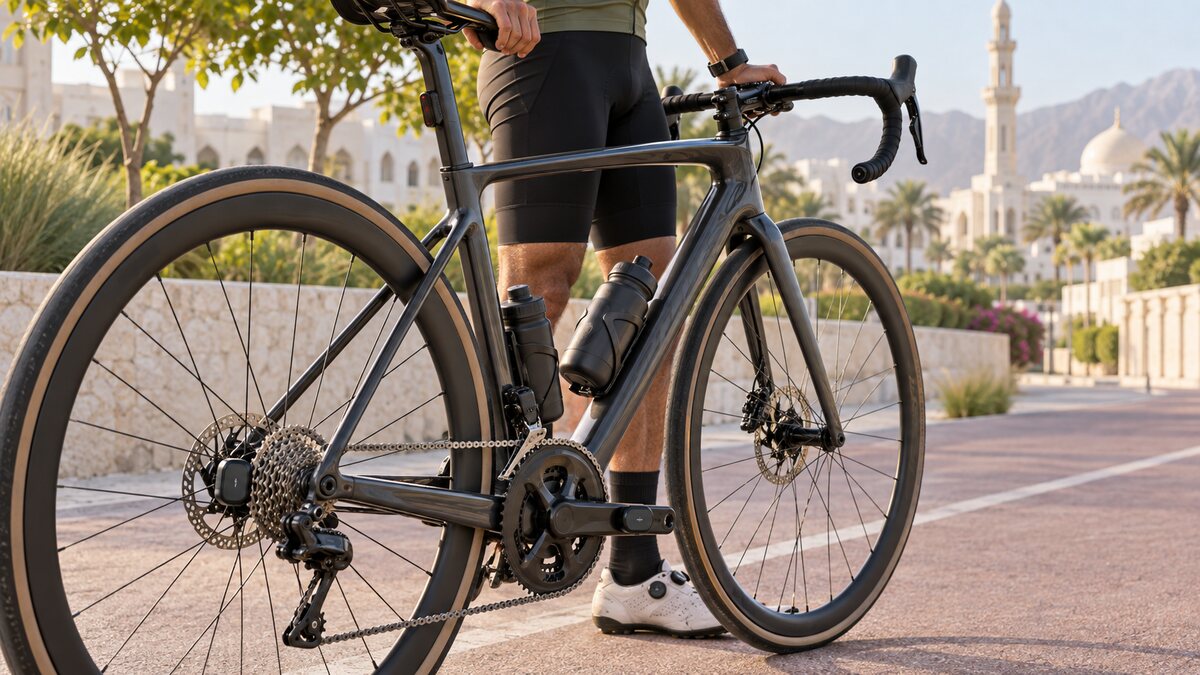
A GPS bike computer can estimate speed and distance using satellite positioning, so cyclists often wonder whether separate sensors are still necessary.
A speed sensor and cadence sensor collect different information. The speed sensor measures wheel movement, while the cadence sensor records how quickly you turn the pedals. Either can improve your cycling data, but the right choice depends on whether you ride outdoors, train indoors or follow structured workouts.
This guide explains their differences and how to choose suitable cycling sensors for riding in Muscat and across Oman.
What Does a Bike Speed Sensor Measure?
A speed sensor is normally attached to the bicycle’s front or rear wheel hub. It detects wheel rotations and uses the wheel circumference to calculate:
- Current speed
- Average speed
- Maximum speed
- Distance travelled
Because the measurement comes from wheel rotation, it does not rely entirely on GPS reception.
When Is a Speed Sensor Useful?
A speed sensor is especially useful during indoor trainer sessions, riding through tunnels, cycling between tall buildings, routes beside mountains or rock faces, and areas with inconsistent satellite reception. GPS remains valuable for mapping and route recording, but wheel-based measurements can provide steadier speed information when satellite conditions are difficult.
What Does a Cadence Sensor Measure?
Cadence is the number of complete pedal revolutions performed each minute, expressed as revolutions per minute or RPM. A cadence sensor is usually attached to one crank arm. It sends your live pedalling rate to a compatible bike computer, sports watch, smartphone or training application.
Cadence information can help cyclists understand their rhythm, gear choice, climbing technique, fatigue and workout targets. Cadence does not directly measure power, speed or fitness; it describes pedalling rhythm.
Speed Sensor vs Cadence Sensor
| Feature | Speed sensor | Cadence sensor |
|---|---|---|
| Measurement | Wheel speed and distance | Pedal revolutions per minute |
| Installation | Wheel hub | Crank arm |
| Works without GPS | Yes | Yes |
| Best for | Consistent speed and distance | Pedalling rhythm and workouts |
| Replaces a power meter | No | No |
Many cyclists use both because the information is complementary rather than interchangeable.
Do You Need Sensors If Your Bike Computer Has GPS?
For recreational outdoor cycling on open roads, a GPS cycling computer may already provide sufficient speed and distance information. Separate sensors become more valuable for indoor training, cadence-based workouts or routes where GPS reception is inconsistent. A sensor can complement GPS, but it does not add navigation or maps.
What About a Power Meter?
A power meter measures cycling output in watts, which is different from cadence and speed. Two riders can maintain the same cadence while producing different power. A power meter is generally more useful for advanced performance training, while speed and cadence sensors provide a simpler starting point.
Connectivity: ANT+ and Bluetooth
Before buying, check which wireless standards are supported by both the sensor and receiving device. ANT+ is widely supported by bike computers, sports watches and indoor trainers. Bluetooth is common with phones, watches and cycling computers. Garmin’s Speed Sensor 2 and Cadence Sensor 2 support ANT+ and Bluetooth Low Energy; COROS states its current cycling sensors connect through Bluetooth. Check compatibility for the exact models.
Garmin and COROS Sensor Features
Garmin Speed Sensor 2 attaches to a wheel hub and Cadence Sensor 2 to a crank arm. Garmin lists replaceable CR2032 batteries, IPX7 water rating and up to 300 hours of activity storage for Speed Sensor 2. COROS lists Bluetooth connectivity for its current cadence sensor, a CR2032 battery, 11-gram weight, IP67 rating and up to 12 months battery life. Actual runtime and compatibility vary by device; consult the manufacturer’s current model instructions.
Pairing and Installation
- Install the sensor securely and check frame, chainstay, spoke and shoe clearance.
- Rotate the wheel or crank to wake it.
- Open the sensor settings on the bike computer and search for the relevant type.
- Select the sensor ID and confirm live data.
- For speed, verify the wheel circumference setting.
For more precise wheel-based distance, measure one wheel revolution with the bicycle loaded normally. Follow the sensor maker’s instructions and check the mount periodically.
Indoor Cycling and Care in Oman
Speed and cadence sensors can add useful data to an indoor setup, but they do not automatically turn a basic trainer into a smart trainer or directly measure power and resistance. Around Muscat, avoid leaving sensors in a parked vehicle, wipe away sweat and dust, inspect mounting bands and keep battery covers sealed. Follow the manufacturer’s temperature and water-care instructions.
Which Sensor Should You Buy?
- Speed sensor: choose it for indoor speed, steadier readings in weak GPS areas or ride recording without a GPS computer.
- Cadence sensor: choose it to observe pedalling rhythm or follow cadence targets.
- Both: consider both if you train indoors and outdoors or want more complete basic cycling data.
- Power meter: consider one when watt-based training is your priority.
Final Buying Checklist
- Speed, cadence or both
- ANT+ and Bluetooth support
- Exact bike-computer compatibility
- Installation clearance and wheel-size settings
- Battery type and maintenance
- Water and dust protection
- Operating-temperature limits
- Local warranty and support
The best sensor is one that connects reliably and provides information you will actually use during training.
Frequently Asked Questions
Is cadence the same as speed?
No. Cadence measures pedal revolutions per minute; speed measures how fast the bicycle travels.
Can a cadence sensor measure distance?
No. Distance normally comes from GPS, a wheel-speed sensor or a compatible indoor trainer.
Can Garmin sensors work with another bike-computer brand?
Often, if both devices support the same ANT+ or Bluetooth sensor profile. Confirm compatibility for the exact models.
Do COROS cycling sensors support ANT+?
COROS states that its current Bike Speed and Cadence Sensors use Bluetooth. Verify current specifications before purchase.
Do I need separate sensors for every bicycle?
Not always. Sensors may be moved between bikes, although dedicated sensors can be more convenient.
Where can I find cycling sensors in Muscat?
Browse the cycling accessories and bike computers at Atlas Tech Sport, and check product pages for current compatibility and availability.
Explore More
Read our GPS bike computer guide and browse cycling accessories for cyclists in Oman.
Choosing a Practical Sensor Setup
Start by deciding which numbers you will actually use. If you ride outdoors on open roads and mainly want a route map, time and general pace, GPS may be enough. If you train on an indoor trainer, a cadence sensor gives you a live view of your pedalling rhythm, while a compatible wheel speed sensor can help record wheel-based speed when the wheel is turning. For workouts that ask you to hold a cadence range, make sure the cadence field is visible on your bike computer before you start.
Riders who switch between several bicycles should check how each sensor attaches and whether it can be paired with more than one head unit. Recheck compatibility and wheel circumference after moving a speed sensor. A short test ride helps confirm that speed and cadence fields update consistently before relying on them in a workout.
Choosing a Practical Sensor Setup
Start with the information you will use. If you ride outdoors on open roads and mainly want a route map, time and general pace, GPS may be enough. Indoor riders and cyclists following cadence targets may benefit from a cadence sensor. A speed sensor can help with wheel-based speed and distance when GPS reception is weak or when training indoors. A power meter is the relevant upgrade when direct watt-based training is the goal.
Compare compatible cycling accessories and bike computers at Atlas Tech Sport. Check the product page or contact the team for current compatibility and availability.