


How to Protect Your Sports Watch From Heat, Sweat and Saltwater in Oman

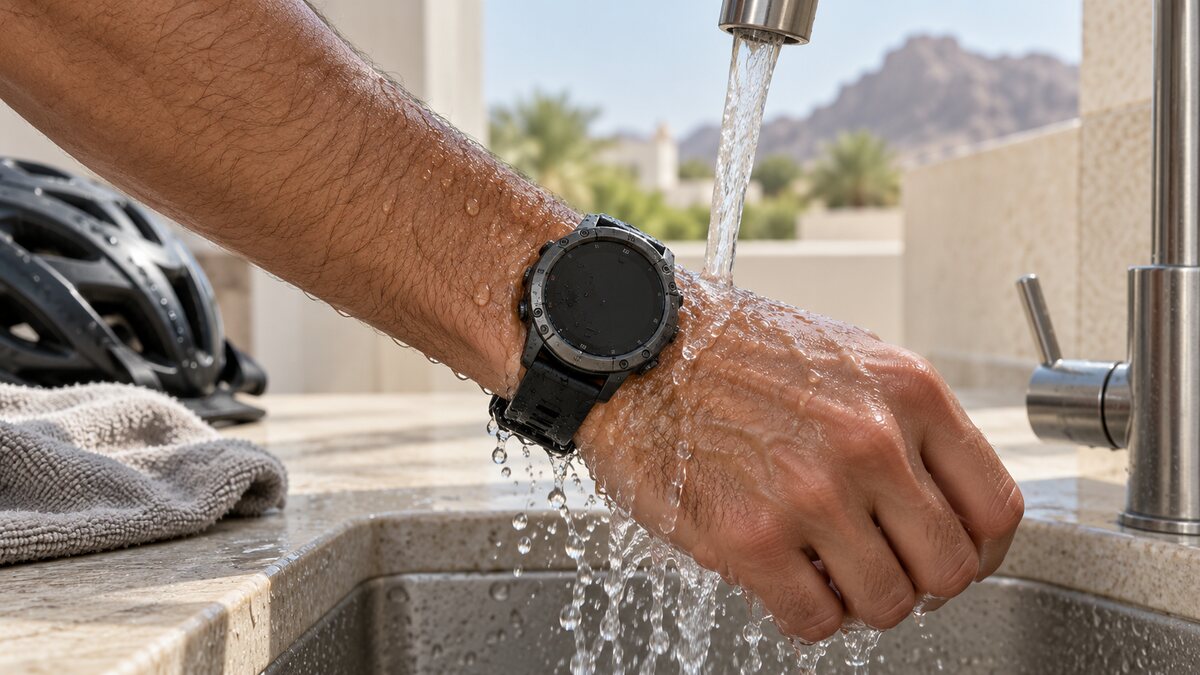
Sports watches are built for training, but Oman’s heat, sweat, dust and coastal salt can still affect their comfort and long-term care. A few simple habits after a ride, run or swim help keep the watch clean and comfortable without damaging its seals or sensors.
This practical guide explains how to care for a Garmin, COROS or other sports watch in Muscat and across Oman. Always use the instructions for your exact model as the final authority, especially for water exposure, cleaning agents, charging and temperature limits.
Why Oman’s Conditions Need a Little Extra Care
High temperatures can make watches and batteries warmer, while sweat leaves salt and residue on the case, sensor window and strap. Sea water adds salt that can dry around buttons and charging contacts. Dust may collect in strap joints or around the case, and a watch left inside a parked car can be exposed to much higher temperatures than the outdoor air.
These conditions do not mean a sports watch cannot be used outdoors. They simply make regular rinsing, drying and sensible storage worthwhile. Do not assume every model has the same operating range or water-care guidance.
After a Sweaty Ride or Run
When a session ends, remove the watch and rinse or wipe it with fresh water if the manufacturer permits. A soft, clean cloth is usually suitable for drying the case and strap. If the watch has removable straps, detach them occasionally to clean residue from the contact points, following the product instructions.
- Rinse sweat from the back of the case and the optical sensor area.
- Use mild soap only if the manufacturer allows it.
- Avoid abrasive pads, solvents, strong detergents and household cleaners.
- Dry the watch before putting it back on.
- Clean skin under the strap too, especially after long sessions.
Do not scrape the sensor window with a sharp object. Residue that does not rinse away can often be removed with a damp soft cloth; check the support instructions for stubborn buildup.
Cleaning After a Saltwater Swim
Salt can crystallise as it dries, especially around buttons, the speaker or microphone openings, strap pins and charging contacts. After swimming in the sea, rinse the watch and strap with fresh water if this is allowed by the manufacturer. Gently move physical buttons under a low flow of clean water only if the model’s care instructions recommend it. Do not use high-pressure spray.
- Rinse off seawater with fresh water.
- Wipe around buttons, strap joints and the sensor area.
- Pat the device dry with a soft cloth.
- Let it air-dry fully before charging or storing.
- Check for salt residue or damage to the strap and seals.
Water resistance is not permanent or identical across products. Age, impact, damaged seals and improper battery-cover handling can affect protection. Do not open a watch or battery compartment to clean it unless the maker’s instructions explicitly call for that procedure.
Protect the Watch From Heat
Never leave a sports watch on a dashboard or inside a parked vehicle in Oman. A car cabin can become much hotter than the outside temperature. Excessive heat can affect the battery, display, adhesives and accuracy of the sensors. Store the watch indoors, away from direct sun and heat sources, and follow the operating and storage temperature range published for that model.
During training, a warm case may be normal in direct sunlight, but stop using the device if it becomes unusually hot, shows a temperature warning or behaves abnormally. Let it cool naturally in a shaded, ventilated place. Do not put a hot watch in a freezer or expose it to a sudden temperature change.
Charging and Battery Habits
Before charging, make sure the watch and charging contacts are clean and dry. Salt, sweat or moisture on the contacts can interfere with charging. Use the supplied or manufacturer-approved cable and avoid forcing the connector into place.
- Rinse and dry the watch after exercise before charging.
- Inspect the contacts for residue, corrosion or damage.
- Keep the charger and cable away from water and direct sun.
- Do not charge a wet watch or one that is still hot from a car or workout.
- Disconnect the charger when charging is complete if the manual advises it.
Battery life varies with GPS settings, display brightness, music, sensors, temperature and age. Heat exposure can accelerate battery wear, so good storage habits matter more than frequent top-ups.
Strap, Pins and Case Checks
The strap takes repeated exposure to sweat, sunscreen, dust and water. Wash it regularly according to its material and the maker’s directions. Silicone straps may tolerate rinsing, while leather or fabric bands may need different care and may not suit every swim.
Inspect the strap, buckle, quick-release pins and attachment points for cracks, stretching or looseness. Replace a damaged strap before a long outdoor session or swim. A watch that comes loose can be lost or damaged, even if its case is water resistant.
Dust, Sunscreen and Everyday Wear
Dust and sunscreen can collect in small gaps. Wipe the watch after use, especially around the sensor, strap and buttons. Avoid applying lotion directly beneath the watch. If you wear it in dusty conditions, clean it with a soft cloth rather than blowing grit into openings or using sharp tools.
For optical heart-rate tracking, a clean sensor and snug but comfortable fit can improve contact. The watch should sit above the wrist bone without being so tight that it causes discomfort. Clean your skin and the watch if irritation develops, and allow the area to dry before wearing it again.
What to Avoid
- Leaving the watch in a parked car or on a sunlit dashboard.
- Charging while the watch or contacts are wet.
- Using solvents, bleach, abrasive cleaners or sharp tools.
- Directing high-pressure water at seals or openings.
- Pressing buttons underwater unless the manufacturer permits it.
- Assuming a swim rating makes the watch suitable for diving or high-speed water sports.
- Ignoring cracks, loose pins, damaged seals or repeated charging problems.
A Simple Weekly Care Checklist
- Rinse sweat and salt from the case after training.
- Clean and dry the strap and sensor window.
- Check charging contacts before plugging in.
- Inspect strap pins, buckle and case for wear.
- Review the model’s temperature and water-care instructions.
- Store the watch indoors, away from direct sun and heat.
A short rinse and dry after use is usually easier than trying to remove hardened salt or residue later.
When to Contact the Manufacturer or Seller
Seek support if the watch shows persistent fogging under the display, water ingress, swelling, unusual heat, damaged buttons, corrosion or recurring charging failure. Avoid opening or repairing a sealed watch yourself, as this may affect water resistance and warranty coverage. Keep purchase and warranty details available when requesting help.
Frequently Asked Questions
Can I wear my sports watch in Oman’s heat?
Use it within the operating temperature range stated for the exact model. Avoid leaving it in a parked car or direct sun when not in use.
Should I rinse my watch after every workout?
Rinsing or wiping away sweat after a session is a good habit, particularly after long or very sweaty training. Follow the manufacturer’s cleaning instructions.
Can I use soap to clean my Garmin or COROS watch?
Only use mild soap if the manufacturer permits it for that model. Avoid solvents, abrasive products and strong detergents.
Can I charge my watch just after swimming?
Wait until the watch and charging contacts are clean and completely dry. Do not connect a wet device to the charger.
Does a water-resistance rating last forever?
No. Seals can age or be damaged by impact, repairs or incorrect handling. Follow care guidance and have concerns checked by an authorised service provider.
Can I press the buttons while swimming?
Button use underwater varies by model. Check the manual; avoid pressing buttons below the surface unless the manufacturer explicitly permits it.
How should I store a sports watch between sessions?
Keep it clean and dry in a cool indoor location away from direct sunlight, heaters and parked-car heat.
Explore More at Atlas Tech Sport
Browse sports watches and watch bands and accessories, or read the sports-watch sizing guide. For model-specific care or current availability, review product details or contact Atlas Tech Sport.