


Chest Strap vs Optical Armband: Choosing a Heart Rate Monitor in Oman

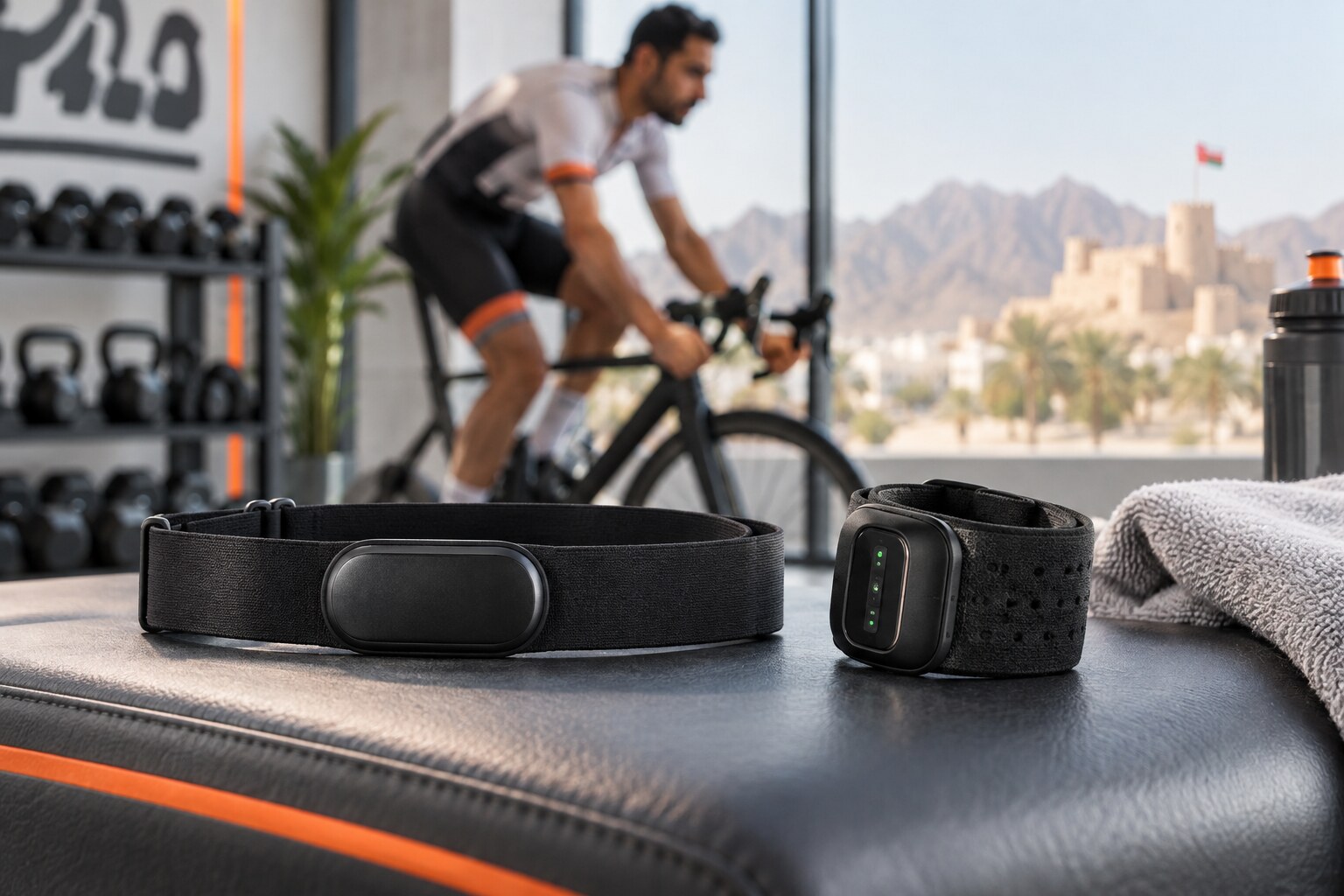
Sports watches can measure heart rate from the wrist, but many athletes prefer a separate sensor when they want more consistent readings during demanding workouts.
The two most common options are electrical chest straps and optical armbands. Both can be useful for running, cycling and gym training, but they differ in comfort, measurement method and ideal use.
Why Use a Separate Heart Rate Monitor?
A compatible external sensor can send heart-rate data directly to a sports watch, GPS bike computer, phone or fitness application. It may be useful for interval running, cycling, structured heart-rate-zone training, gym workouts and activities involving frequent wrist movement.
How Chest-Strap Heart Rate Monitors Work
A chest strap uses electrodes positioned against the skin to detect the electrical activity associated with each heartbeat.
Advantages of a Chest Strap
- Fast response to changing effort
- Secure positioning during intense exercise
- Long battery life on many models
- Compatibility with many watches and bike computers
Chest straps are commonly preferred for intervals, racing and structured cycling workouts.
Potential Disadvantages
Some users find a strap around the chest uncomfortable during long sessions. The electrode area may need to be moistened before exercise, and regular cleaning is important because sweat and salt can build up quickly in Oman’s warm climate.
How Optical Armband Sensors Work
An optical armband uses light-based sensors to estimate blood-flow changes beneath the skin. It is usually worn around the upper arm or forearm.
Advantages of an Optical Armband
The main advantage is comfort. Many athletes prefer wearing a sensor on the arm instead of around the chest. It can be convenient for gym sessions, regular fitness training and long workouts.
Potential Disadvantages
Optical readings can be affected by placement, movement, skin contact and fit. The sensor should be secure without being excessively tight. Optical armbands normally use a rechargeable battery.
Chest Strap or Armband: Which Is Better?
| Priority | Better starting choice |
|---|---|
| Fast-changing intervals | Chest strap |
| Competitive cycling | Chest strap |
| Comfort during everyday workouts | Optical armband |
| Gym and general fitness | Optical armband |
| Long periods between battery changes | Often a chest strap |
| Rechargeable operation | Optical armband |
Check Compatibility Before Buying
Do not assume that every sensor connects to every device. Check the communication standards supported by both products.
ANT+
ANT+ is widely used by sports watches, cycling computers, indoor trainers and fitness equipment. It can allow one sensor to transmit data to multiple compatible receivers.
Bluetooth
Bluetooth is commonly used for smartphones, fitness applications, watches and bike computers. Some sensors support both ANT+ and Bluetooth, but the number of simultaneous connections can vary.
Choosing a Sensor for Cycling
Cyclists often view heart rate on a handlebar-mounted bike computer. Confirm that the sensor works with the selected Garmin, COROS or iGPSPORT device. Compare connection stability, interval response, battery endurance, long-ride comfort and ease of cleaning.
Choosing a Sensor for Running and Gym Training
A chest strap may suit runners performing short, hard intervals. An optical armband may be more comfortable for steady runs and everyday training. Always follow the manufacturer’s fitting instructions.
Care in Muscat’s Climate
- Disconnect removable modules when instructed.
- Rinse or wipe away sweat.
- Wash textile straps according to the manufacturer’s directions.
- Let the sensor dry before storing it.
- Keep charging contacts clean and dry.
- Avoid leaving the device in a hot parked vehicle.
A Practical Buying Checklist
- Chest or arm placement
- ANT+ and Bluetooth support
- Compatibility with your watch or bike computer
- Number of simultaneous connections
- Battery type and expected duration
- Water and sweat resistance
- Adjustable size range
- Local warranty and support
Frequently Asked Questions
Is a chest strap always more accurate?
Chest straps are often preferred for workouts involving rapid intensity changes, but performance depends on fit, placement, skin contact and the individual product.
Can I connect one monitor to a watch and bike computer?
Some sensors support simultaneous connections, but the number and type vary. Check the exact specifications.
Can I swim with a heart rate sensor?
Only if the model supports swimming and its water rating permits the intended use.
Is an external sensor necessary if my watch measures heart rate?
Not for everyone. Wrist-based monitoring may be sufficient for daily tracking and many steady workouts.
Where can I find heart rate monitors in Muscat?
Browse heart rate monitors and sports sensors at Atlas Tech Sport for customers in Muscat and across Oman.