

Do You Need a Bike Radar Taillight for Cycling in Oman?

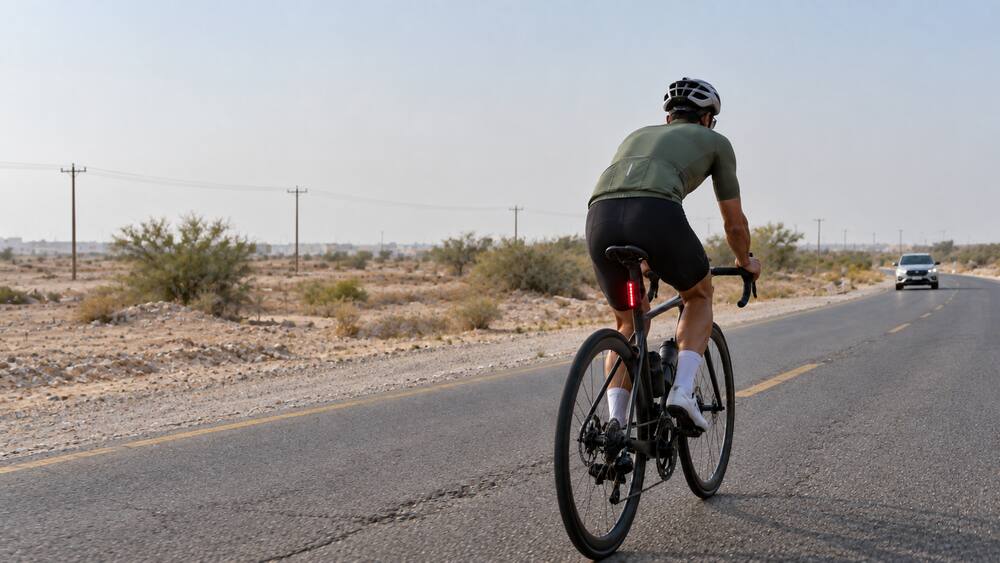
When cycling on roads around Muscat or completing longer rides across Oman, approaching vehicles can be difficult to monitor continuously. Wind noise, traffic and the riding position may make it harder to judge what is happening behind you.
A bike radar taillight combines two useful functions: a rear light designed to improve visibility and a radar sensor that detects vehicles approaching from behind. It can send visual or audible alerts to a compatible cycling computer, sports watch or smartphone.
Radar is an additional awareness tool—not a replacement for looking behind, using mirrors, following traffic rules or making safe road-positioning decisions.
How Does a Bike Radar Taillight Work?
A rear-facing bicycle radar emits radio signals and analyses their reflections to identify vehicles approaching from behind. When a vehicle enters the detection area, the connected display may show:
- The position of the approaching vehicle
- How quickly it is getting closer
- Multiple vehicles behind the cyclist
- A change in warning colour when closing speed increases
- Visual and audible notifications
The exact presentation depends on the radar, cycling computer and application. Some models also change their flashing pattern when traffic approaches, helping the cyclist become more noticeable to the driver.
Why Radar Can Be Useful for Cycling in Oman
Fast Roads Outside Muscat
On open roads, the speed difference between a cyclist and an approaching vehicle can be considerable. An early alert gives the rider additional time to hold a predictable line and assess the traffic situation.
Group Rides
During group rides, cyclists may not always hear an approaching vehicle or a warning from another rider. Radar data provides an additional notification. Some devices also include a group or peloton lighting mode that is less distracting for cyclists riding directly behind.
Early-Morning and Evening Training
Cyclists in Oman frequently train before sunrise or after sunset to avoid the strongest heat. A radar taillight combines rear illumination with approaching-vehicle alerts during these lower-light periods.
Long Solo Rides
Radar can be particularly helpful on solo endurance rides when concentration may decrease with fatigue. It does not eliminate the need for regular visual checks, but it adds another source of information.
Understanding Radar Range and Alerts
A compatible bike computer normally displays vehicles as indicators moving along the side of the screen. Depending on the system, warning colours or sounds can change as traffic gets closer.
iGPSPORT states that the SR mini smart radar taillight can track up to eight targets and detect approaching vehicles from up to 160 metres under suitable conditions. Its published specifications list an approximately 45-degree horizontal detection angle and approaching-speed detection from 4 to 110 km/h.
Garmin states that the Varia RTL515 can detect approaching vehicles from up to 140 metres away when correctly installed. These figures represent manufacturer maximums and should not be interpreted as guaranteed performance in every situation.
Actual detection can vary because of road curves, hills, mounting position, traffic speed, obstacles behind the bicycle and environmental conditions.
Longer Range Is Not the Only Priority
Detection distance matters, but it should not be the only specification used to compare radar products. Also consider:
- Detection angle
- Number of vehicles tracked
- Performance on bends and hills
- Clarity of on-screen alerts
- Audible notification support
- Compatibility with your existing cycling computer or watch
- Mounting stability and available adapters
Rear-Light Visibility and Lighting Modes
The light remains important even when radar is connected. Useful modes may include solid light, day flash, night flash, group mode, automatic brake warning and radar-only operation.
The iGPSPORT SR mini provides six listed modes: solid, group, breathing, daytime flash, night flash and radar-only. iGPSPORT also lists a 30-lumen rear light, a wide visibility angle and visibility of up to 1.2 kilometres under suitable conditions.
Garmin’s Varia RTL515 provides solid, peloton, night-flash and day-flash modes. Select brightness and flash behaviour for the riding conditions, without aiming the light in a way that unnecessarily distracts other road users.
Check Compatibility Before Buying
ANT+ Radar Support
Many cycling computers use the ANT+ radar profile. Check that the exact computer specifically supports bicycle radar—not merely general ANT+ sensors.
Bluetooth and Smartphone Support
Some radar units connect to a compatible smartphone application using Bluetooth. This can help riders who do not own a dedicated cycling computer.
Sports-Watch Support
Selected sports watches can display radar alerts, but compatibility varies by model and software version.
Mixing Brands
A radar and computer do not always need to come from the same manufacturer. Standard wireless profiles may permit cross-brand operation, but confirm the exact combination before purchasing. The iGPSPORT SR mini officially lists both Bluetooth and ANT+ connectivity.
Browse iGPSPORT cycling products and accessories or compare available devices in the Atlas Tech Sport shop.
Battery Life: Compare the Correct Mode
Battery endurance varies with light intensity, flash pattern, radar-only operation, connected devices, temperature and battery age.
iGPSPORT rates the SR mini for up to 20 hours, with the maximum associated with radar-only use. It charges through USB-C and has a listed weight of 50 grams. Garmin rates the Varia RTL515 for up to 16 hours in day-flash mode, eight hours in peloton mode and six hours in solid or night-flash modes.
Choose enough endurance for your longest planned ride, plus a practical safety reserve.
Mounting Position Matters
The radar needs an unobstructed view behind the bicycle. For more reliable operation:
- Install it as high as practical on the seatpost.
- Keep the device upright and facing directly backwards.
- Do not let a saddlebag, bottle or clothing obstruct it.
- Confirm the mount cannot rotate on rough roads.
- Use the correct adapter for the seatpost shape.
- Check alignment before every long ride.
Incorrect alignment can affect both radar detection and the direction of the rear light.
Using Radar With a GPS Bike Computer
A compatible computer can display approaching vehicles alongside navigation and training data. A connected cycling setup may include:
- GPS bike computer
- Radar taillight
- Heart-rate monitor
- Speed and cadence sensors
- Optional power meter
Read our guide to choosing a GPS bike computer in Oman for more information about navigation, screens, battery life and sensor compatibility.
Garmin Varia Options
Varia RTL515
The RTL515 combines vehicle detection with a rechargeable rear light and can communicate with compatible Edge computers, selected Garmin wearables and the Varia smartphone application.
Varia RCT715
The RCT715 adds an integrated camera that records while also providing radar detection and rear illumination.
Varia eRTL615
The eRTL615 is designed for compatible e-bikes and receives power from the bicycle instead of using a standalone rechargeable battery.
Heat, Dust and Charging in Oman
Cycling accessories in Oman may be exposed to high temperatures, dust, strong sunlight and perspiration. Recommended care includes:
- Avoid leaving the radar inside a parked vehicle.
- Allow the device to cool before charging.
- Keep the charging port clean and dry.
- Close the port cover properly before riding.
- Wipe away sweat and road dust after use.
- Inspect the mount regularly.
- Follow the manufacturer’s operating-temperature limits.
- Recharge before long or remote rides.
Both the iGPSPORT SR mini and Garmin Varia RTL515 carry an IPX7 water-resistance specification, but charging connections should still be clean and dry before use.
What Bicycle Radar Cannot Do
A radar taillight can improve situational awareness, but it cannot:
- Confirm that a driver has seen the cyclist
- Detect every vehicle in every condition
- Replace a shoulder check
- Identify hazards approaching from the front
- Guarantee a safe lane change
- Replace required lighting or reflective equipment
- Make an unsafe road suitable for cycling
The rider remains responsible for observing the road and making safe decisions.
Which Type of Bike Radar Should You Choose?
Choose a Compact Radar Taillight If:
- Low weight matters.
- You want radar and lighting in one unit.
- You already use a compatible bike computer.
- You need practical endurance for regular rides.
Choose a Radar With a Camera If:
- You want video recording alongside vehicle alerts.
- Additional size and power use are acceptable.
- Reviewing recorded incidents is important.
Choose an E-Bike-Powered Radar If:
- Your e-bike provides a compatible power connection.
- You do not want to recharge a separate radar battery.
- The required cable and installation are available.
Final Buying Checklist
- Maximum detection distance and angle
- Number of vehicles tracked
- ANT+ radar compatibility
- Bluetooth and smartphone support
- Compatible bike computers and watches
- Rear-light visibility and lighting modes
- Battery duration in each mode
- Charging connection
- Weight and dimensions
- Water rating
- Mount and replacement-adapter availability
- Firmware-update process
- Local warranty and support
The best bike radar is one that connects reliably, remains correctly aligned and provides alerts that are easy to understand without distracting from the road.
Frequently Asked Questions
Does a bike radar detect motorcycles?
It may detect motorcycles and other vehicles approaching with sufficient relative speed, but performance varies. Never assume every motorcycle or vehicle will be detected.
Can radar work without a bike computer?
Some models connect to a compatible smartphone application. Others require a cycling computer, watch or dedicated display to show alerts.
Can I use an iGPSPORT radar with a Garmin computer?
Cross-brand operation may be possible when both devices support the relevant ANT+ radar profile. Confirm compatibility for the exact models and current firmware.
Does radar work on group rides?
Yes, although nearby cyclists and traffic patterns can affect how alerts are presented. A group or peloton light mode can reduce disturbance to riders immediately behind.
Is a bike radar useful during daylight?
Yes. Radar detection operates independently of darkness, while a daytime flashing light can help improve visibility.
Where can I find a bike radar taillight in Muscat?
Atlas Tech Sport supplies cycling computers and smart cycling accessories for customers in Muscat and across Oman. Review the iGPSPORT SR mini product page or contact Atlas Tech Sport for product guidance.