


Health Band vs Sports Watch: Which Is Right for You in Oman?

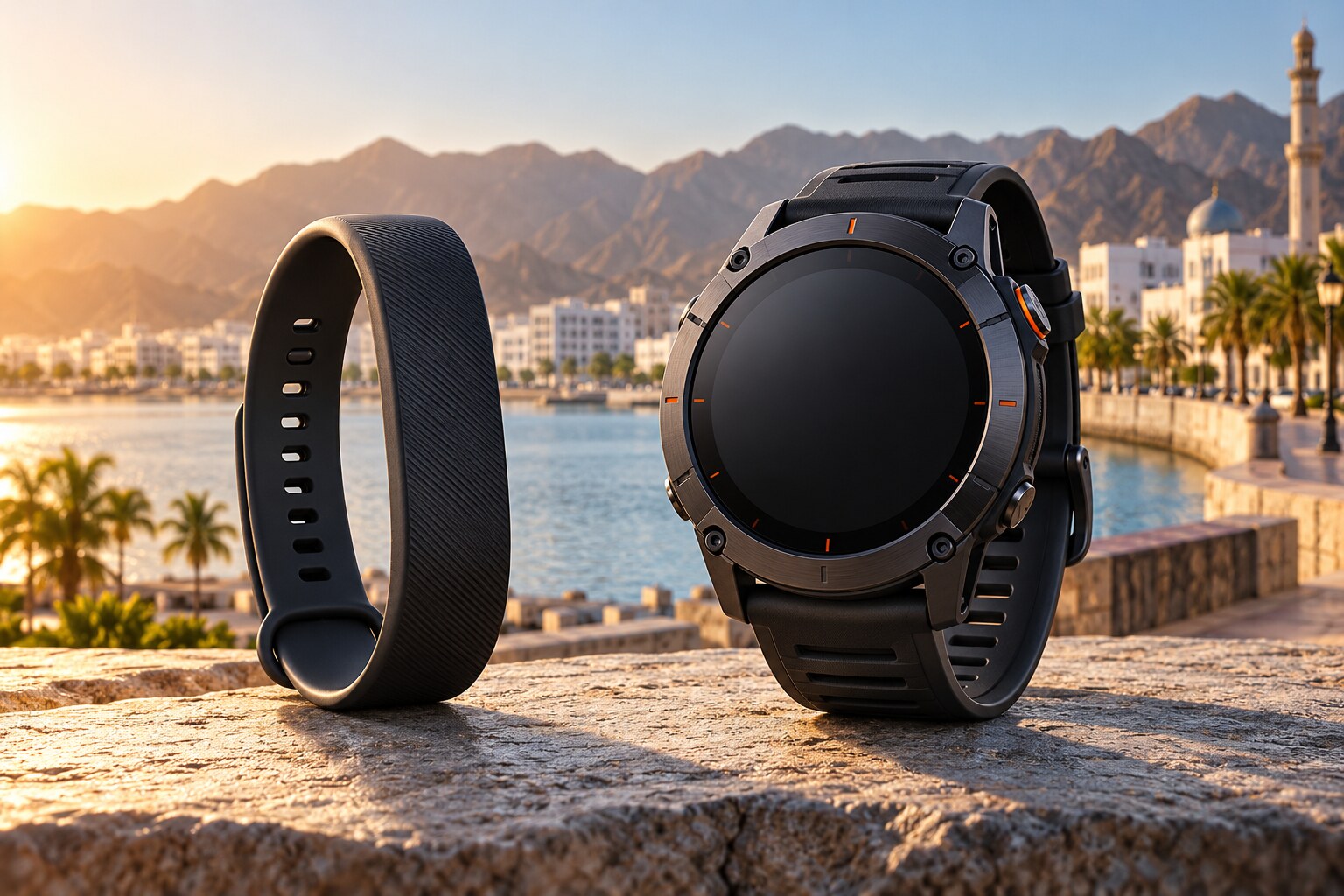
Health bands and sports watches can both record daily activity and provide useful wellness information, but they are designed for different priorities.
A lightweight health band may suit someone who wants discreet, continuous tracking with fewer distractions. A sports watch is generally better for athletes who need on-device workout data, GPS navigation and sport-specific features.
This guide compares the two options for customers in Muscat and across Oman.
What Is the Main Difference?
A health band primarily focuses on passive daily monitoring. Depending on the model, it may track movement, heart rate, sleep, recovery-related information and other wellness trends.
A sports watch normally combines daily tracking with a screen, workout profiles and more direct control during exercise. Advanced models may also provide built-in GPS, maps, structured workouts and connections to external sensors.
Choose a Health Band for Discreet Daily Tracking
Health bands are usually smaller and less visually prominent than sports watches. Some models have no conventional display, encouraging users to review their information in a companion application.
A band may be suitable if you want:
- A lightweight device for day-and-night wear
- Sleep and daily-activity trends
- Fewer notifications and screen distractions
- Wellness information displayed in an application
- A device that can be worn alongside a traditional watch
- Less interaction with the wearable during exercise
Consistent wear is important. Even an advanced tracker provides limited trend information when it is frequently removed.
Choose a Sports Watch for Training and Navigation
A sports watch is normally the stronger option when you need information while exercising. Depending on the model, the watch may display:
- Current pace and distance
- Heart-rate zones
- Workout steps and lap information
- Navigation prompts and elevation
- Cycling sensor data
- Recovery and training information
Garmin Connect, for example, allows compatible Garmin-device users to review health information, activity history and weekly, monthly and yearly averages. It supports activities including running, cycling, swimming and strength training.
GPS Is an Important Difference
Many sports watches contain built-in GPS and can record an outdoor activity without relying on a phone. Some health bands use connected GPS or concentrate mainly on daily wellness signals.
Before purchasing, check whether the exact device provides built-in GPS, connected GPS through a phone, route navigation, offline maps, back-to-start guidance and satellite modes suitable for longer activities.
Screen or No Screen?
Advantages of a Screen
A display allows you to check information immediately. This is valuable during running, cycling, hiking or structured workouts. It can also provide timers, alarms, navigation instructions, workout targets, music controls and notifications.
Advantages of a Screenless Design
A screenless health band can feel less distracting and may look more discreet. It encourages the user to focus on longer-term patterns inside the application instead of repeatedly checking individual readings. The disadvantage is that a phone is usually needed to review detailed information.
Comfort and Sleep Tracking
A device can only record overnight trends if it remains comfortable enough to wear while sleeping. Compare total weight, strap material, sensor thickness, adjustment range, ventilation, skin contact and whether the display illuminates at night.
Battery Life and Charging
Battery performance varies substantially between models and operating modes. A health band without a large display may last longer between charges. A sports watch may consume more power when using GPS, maps, music or an always-on display.
When comparing battery figures, check typical daily-use estimates, GPS endurance, always-on-display endurance, charging time and whether sleep tracking will be interrupted. Manufacturer figures are estimates, and actual results depend on settings and usage.
Understanding the Hume Band 2.0
The Hume Band 2.0 is an example of an app-focused health band. According to Hume, it records signals including heart rate, HRV, blood oxygen, sleep stages, movement, strain, recovery and skin temperature. Its core application is included, while personalised coaching is an optional premium upgrade.
These measurements are intended for wellness and trend tracking. A consumer health band should not be used to diagnose a medical condition or replace professional medical advice.
Training in Muscat’s Climate
- Check the device’s temperature and water-resistance specifications.
- Clean sweat from the sensor and strap after training.
- Allow the device and skin to dry.
- Avoid overtightening the strap.
- Do not leave the wearable inside a parked vehicle.
- Allow a hot device to cool before charging.
- Follow the manufacturer’s cleaning instructions.
Health Band vs Sports Watch: Quick Comparison
| Priority | Better starting choice |
|---|---|
| Discreet all-day tracking | Health band |
| Comfortable overnight use | Often a health band |
| Live workout information | Sports watch |
| Built-in GPS and navigation | Sports watch |
| Fewer screen distractions | Screenless health band |
| Structured athletic training | Sports watch |
| Maps and route guidance | Advanced sports watch |
Check the App Before Buying
Look for clear daily, weekly and monthly trends, Android and iPhone compatibility, data export, integration with other fitness platforms, subscription requirements, privacy controls and firmware updates.
Final Buying Checklist
- Primary purpose: wellness or athletic training
- Screen or screenless design
- Built-in GPS
- Supported sports
- Battery life in relevant modes
- Comfort during sleep
- Water-resistance rating
- Phone compatibility
- App and subscription requirements
- External-sensor compatibility
- Local warranty and support
Frequently Asked Questions
Is a health band better than a smartwatch for sleep?
A lighter band may be more comfortable overnight, but sleep tracking also depends on sensor design, fit, software and consistent wear.
Can a health band replace a GPS sports watch?
It can replace one for basic daily monitoring, but athletes needing live pace, navigation, structured workouts or detailed GPS information will usually benefit from a sports watch.
Do all fitness bands have GPS?
No. Some have built-in GPS, while others use a connected phone or provide no route recording.
Are wearable health readings medically accurate?
Consumer wearables provide estimates and trends. They should not be used independently for diagnosis, medication decisions or emergency assessment.
Where can I compare health bands and sports watches in Muscat?
Explore Hume health bands, Garmin watches and COROS watches at Atlas Tech Sport for customers in Muscat and across Oman.