








iGPSPORT VS1800S: A Smart Bike Light for Early-Morning Rides in Oman

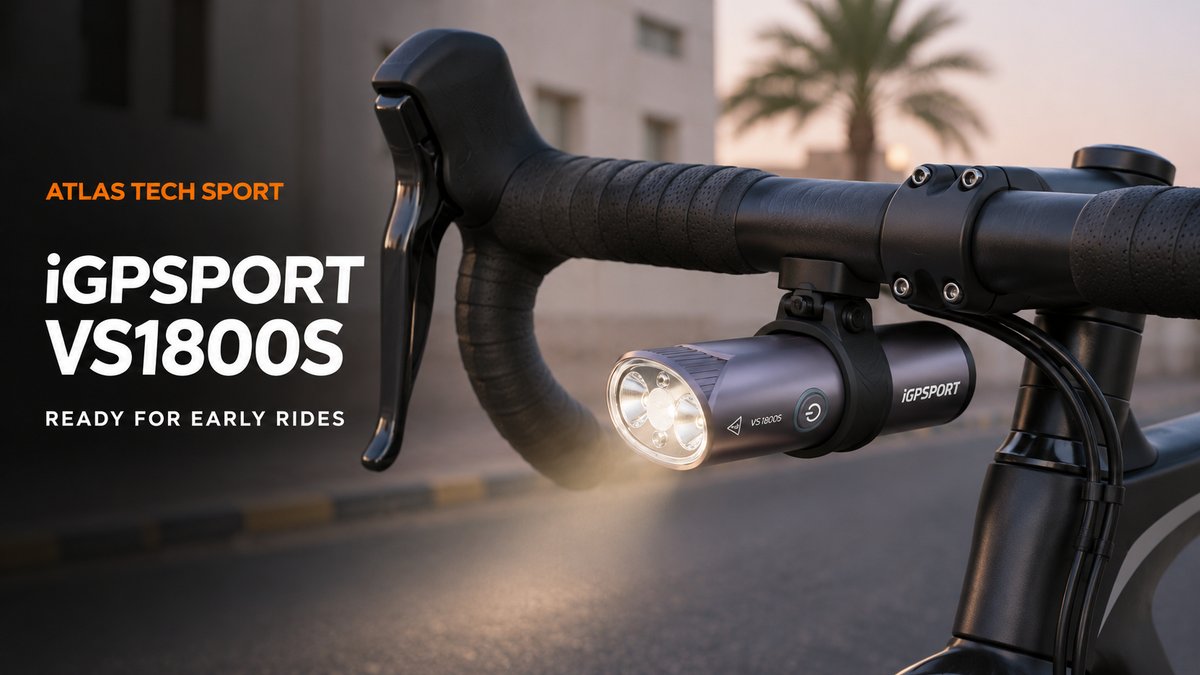
A morning ride in Muscat can start before sunrise and finish in full daylight. During that transition, your front light needs to help illuminate the road while remaining practical to adjust as conditions change.
The iGPSPORT VS1800S brings together powerful illumination and connected controls. But choosing a cycling headlight involves more than looking at its maximum brightness. Beam shape, battery settings, mounting and compatibility all deserve attention.
This guide explains the VS1800S’s key features and what to consider before adding it to your cycling setup in Oman.
Manufacturer specifications checked on 23 November 2026. This is a documentation-based guide, not a hands-on test.
What Makes the VS1800S Different?
According to iGPSPORT, the VS1800S offers:
| Feature | Published specification |
|---|---|
| Maximum output | Up to 1,800 lumens |
| Beam options | High and low beam |
| Automatic adjustment | Ambient-light sensing |
| Connected controls | App and compatible bike-computer control |
| Battery capacity | 6,700 mAh |
| Published endurance | 3–16 hours |
| Charging connection | USB-C |
| Water-resistance rating | IPX7 |
| Weight | 194 g |
The manufacturer also describes a cutoff design intended to reduce glare and thermal regulation that can reduce brightness when the light becomes hot. Actual endurance depends on settings and conditions. See the official iGPSPORT VS1800S specifications.
High and Low Beam: Choose Useful Illumination
Maximum brightness is only one part of a useful headlight. Where the light falls matters just as much.
Riding on Unlit Roads
Before sunrise, you need steady illumination that helps you identify the road surface ahead. Check whether the selected setting provides enough forward visibility and coverage for your riding pace.
Avoid choosing a speed that leaves too little time to react to obstacles within the illuminated area.
Riding Around Other Road Users
On roads with approaching traffic or other cyclists, beam angle becomes especially important.
Aim the light according to the manufacturer’s instructions. A cutoff design can help manage light distribution, but correct positioning still matters. Do not assume that a powerful light can be pointed anywhere without creating glare.
Automatic Brightness for Changing Conditions
One practical challenge of early rides is moving between dark stretches, street lighting and daylight.
Automatic adjustment can reduce the number of manual changes you need to make. Nevertheless, check the light’s behaviour on a familiar route before relying on your chosen setup for a longer ride.
Confirm that the selected mode remains suitable for the road, rather than assuming that automatic operation always chooses your preferred brightness.
Control Through Your Cycling Setup
Connected controls can be useful when you already use an iGPSPORT cycling computer.
Check Compatibility First
Confirm compatibility between the exact computer, light and firmware versions. Sharing the same brand name does not guarantee that every connected function will be available.
Configure Before Starting
Pair the devices and select your preferred settings while stationary. Familiarise yourself with the controls before heading onto the road.
It is also useful to know how to operate the light directly if the wireless connection is unavailable.
Battery Life: Plan for the Dark Part of Your Ride
The published endurance range should not be interpreted as the longest runtime at maximum brightness.
For a morning ride, first estimate how long you expect to remain in darkness. Then consider the setting you will use during that period.
Leave a reserve for:
- A delayed start or finish
- Changes to the planned route
- Longer sections without street lighting
- Higher-output settings than originally expected
For extended rides, carrying a small backup light provides another option if the main unit loses charge or develops a mounting problem.
Heat and Output
A light’s output may change during use. Thermal regulation protects the device by adjusting brightness when necessary.
Test your setup under realistic riding conditions rather than judging performance only from a brief indoor demonstration.
Mounting the Light Below the Handlebar
An under-handlebar position can leave the upper part of the cockpit clear for your cycling computer. However, the mount and orientation must suit the light.
Keep the Optical Orientation Correct
Do not simply turn the entire light upside down to place it below the bar. Follow the manufacturer’s installation instructions so the beam retains its intended orientation.
This is particularly relevant when a light uses a shaped beam or cutoff.
Check Clearance and Stability
Before riding, confirm that:
- The bracket is secure.
- Cables do not obstruct the lens.
- The light clears the tyre and other equipment.
- Steering remains unrestricted.
- The beam points towards the road.
- The unit does not rotate over bumps.
Check the mount again after the first ride and after transporting the bicycle.
A Front Light and Rear Light Serve Different Purposes
The VS1800S addresses forward lighting. A rear light helps make the bicycle noticeable from behind.
For pre-sunrise rides, consider both as part of your setup. Check that a saddlebag or clothing does not cover the rear light.
A radar taillight adds another function: approach alerts through compatible equipment. It does not replace forward illumination or the need to check traffic.
Caring for Your Light in Oman
Heat, dust and perspiration make routine care worthwhile.
After riding, clean the light and bracket according to the manufacturer’s guidance. Inspect the mount for movement and keep the lens clear.
Before charging:
- Allow a hot device to cool.
- Ensure the charging connection is dry.
- Check the cable and port.
- Follow the specified charging conditions.
Avoid leaving the light inside a parked vehicle. Water resistance does not mean that a wet charging port should be used.
Who Should Consider the VS1800S?
The VS1800S is worth comparing if you regularly ride before sunrise, encounter unlit stretches or want connected lighting controls.
Before choosing it, consider your usual route, expected time in darkness, available mounting space and computer compatibility.
For shorter rides on well-lit roads, compare whether a smaller light would meet your needs. For longer routes, give battery endurance and dependable mounting as much attention as brightness.
Frequently Asked Questions
Does the VS1800S need to run at maximum brightness throughout a ride?
No. Choose a setting suited to the conditions while maintaining sufficient road visibility and controlling glare.
Does 1,800 lumens tell me exactly how far I can safely see?
No. Beam distribution, positioning, road conditions and riding speed also matter.
Can I mount it below the handlebar?
Use the supported mounting arrangement and follow the installation instructions. Preserve the intended beam orientation and check clearance.
Will it connect to every iGPSPORT computer?
Confirm the exact model and firmware compatibility before purchasing.
Can the front light replace a rear light?
No. Forward illumination and rear visibility serve different purposes.
What should I check before an early-morning ride?
Check charge, operating mode, beam angle, mount security and rear-light visibility.
Find the Right Lighting Setup for Your Ride
A suitable headlight should fit your route and remain easy to operate throughout the ride.
Contact Atlas Tech Sport for help comparing the iGPSPORT VS1800S with your cycling computer and existing accessories in Muscat and across Oman.
Explore the iGPSPORT VS1800S product page and our iGPSPORT collection. For connected navigation options, see our BiNavi Ultra, BiNavi and Air comparison.
Cover: AI-generated editorial illustration based on official VS1800S product references. Follow the supplied instructions for the actual bracket and optical orientation.