


Sleep Tracking With a Smart Band or Sports Watch in Oman: A Practical Guide

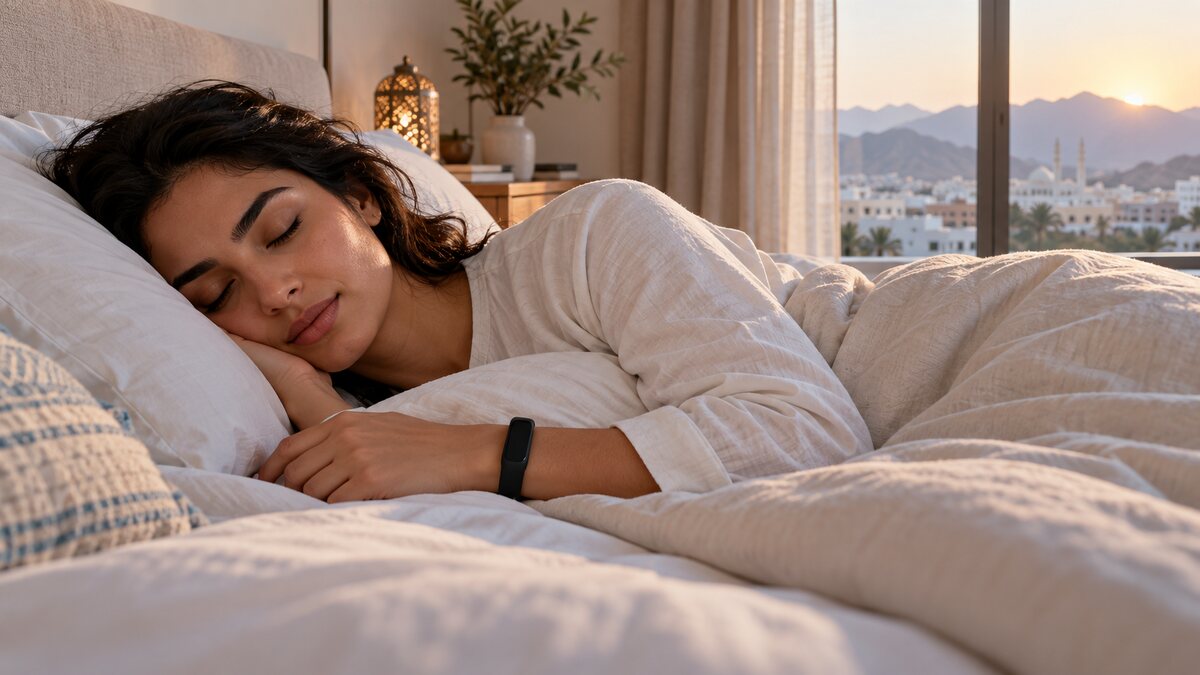
A smart band or sports watch can show useful sleep estimates and overnight trends, but the numbers are not a medical diagnosis. The most helpful approach is to wear the device consistently, understand what it measures and look at patterns over time instead of reacting to a single score.
This guide explains how sleep tracking works, how to choose between a compact band and a multisport watch, and how to get more consistent readings in Muscat and across Oman.
What a Wearable Can Estimate During Sleep
Most sleep wearables combine motion data with other sensor signals to estimate when you fell asleep, when you woke, and periods of movement. Depending on the model, the app may also show:
- Total sleep duration
- Sleep and wake times
- Awake periods or restlessness
- Estimated light, deep and REM sleep stages
- Overnight heart-rate trends
- Breathing rate or blood-oxygen estimates on compatible devices
- Sleep score or recovery context
These are estimates derived from wrist sensors and algorithms. A consumer wearable cannot directly measure brain activity like a clinical sleep study, so its stage labels should be treated as approximations rather than exact measurements.
Smart Band vs Sports Watch for Sleep
A smart band is usually smaller and lighter, which may make it easier to sleep with. It can be a practical choice if sleep, daily activity and comfort are priorities and you do not need advanced GPS sports functions.
A sports watch combines sleep estimates with training profiles, GPS, workout records and other performance features. It may be more versatile for someone who already wears a watch throughout the day. Its larger case can feel noticeable at night, especially for side sleepers or people with smaller wrists.
| Consideration | Smart band | Sports watch |
|---|---|---|
| Night comfort | Often compact and light | Varies with case size and weight |
| Sleep trends | Usually covers core estimates | May combine sleep with training context |
| GPS workouts | Limited or absent on many models | Common on dedicated sports models |
| Battery routine | Often less frequent charging, model dependent | Depends on display, GPS and settings |
| Best starting point | Comfort and everyday health trends | One device for training and daily wear |
Product features differ, so check the exact model and its companion app rather than assuming every band or watch provides the same metrics.
How Sleep Stages Are Estimated
Wearables typically combine wrist movement with heart-rate patterns and, on selected devices, other signals. The software uses these patterns to estimate sleep onset, wake periods and stages. Since the algorithms infer rather than directly observe sleep, results may differ from one device to another or from a formal sleep assessment.
Nightly stage charts are most useful as a broad trend in the same device and app. A change from one night to the next does not necessarily indicate a meaningful change in health or sleep quality.
How to Get More Consistent Sleep Data
- Wear it regularly. Consistent nights provide a clearer baseline than sporadic tracking.
- Fit it comfortably. The device should stay in contact with the skin without being painfully tight. Follow the manufacturer’s position guidance.
- Set your usual sleep window. Enter bedtime and wake-time preferences in the app if the feature is available.
- Keep the sensors clean. Wipe sweat, sunscreen and dust from the back of the case and strap.
- Charge before bed. Use a charging routine that does not leave the wearable off for most nights.
- Sync regularly. Keep the app and watch software up to date, and sync so trends are not delayed.
- Review multiple weeks. Compare typical sleep timing and duration rather than focusing on one score.
Why Sleep Tracking Can Be Inaccurate
A device can confuse quiet wakefulness with sleep, or restless sleep with waking. Fit, skin contact, movement, charging gaps, travel, illness, alcohol, late exercise and unusual bedtimes can all affect what the algorithm records. A loose watch may have inconsistent sensor contact; wearing it too tightly can be uncomfortable.
If the device reports that you slept while you remember being awake, or misses a period when you were asleep, that limitation is expected from an estimate. Do not change important health decisions based only on a consumer sleep score.
Sleep Tracking in Oman’s Routine
Heat, late evening activity, travel between time zones and different work schedules can shift sleep timing. A wearable may help you notice a repeated pattern, such as going to bed later after evening training or shorter sleep before an early ride. It cannot explain the cause on its own.
Keep the device cool and dry while charging, and avoid leaving it in a parked car or direct sunlight. If you use a sports watch for daytime workouts, a short rinse and dry after a sweaty session can make it more comfortable to wear overnight. Use the care instructions for the exact model.
Choosing a Device for Sleep
Before buying, consider more than the number of metrics shown in the app:
- Case size, weight and strap comfort at night
- Whether the band can be adjusted securely
- Battery life with sleep monitoring enabled
- Charging time and your daily routine
- How clearly the app presents sleep history
- Whether the device tracks workouts you actually do
- Compatibility with your phone
- Data privacy and account settings
- Local warranty and support
If sleep comfort is the main reason for buying, try on the device if possible and check its dimensions. A lighter model that you wear consistently can be more useful than a feature-rich watch that you remove every night.
Using Scores Without Overreacting
A sleep score can be a quick summary, but its formula is specific to the brand and model. Scores from different manufacturers are not directly comparable. A low score after one unusual night does not prove that something is wrong, and a high score does not guarantee that you are fully rested.
Look for broad, repeated patterns: regular bedtime, sufficient sleep opportunity, frequent waking or a consistent change from your normal routine. Combine the data with how you feel and your training schedule. If you are concerned about ongoing sleep problems, discuss them with a qualified healthcare professional rather than relying on a wearable interpretation.
Quick Checklist for Better Tracking
- Choose a device comfortable enough to wear overnight.
- Wear it consistently and keep a stable fit.
- Keep the sensors clean and the software synced.
- Charge it at a time that does not interrupt most nights.
- Review trends across weeks, not isolated scores.
- Treat stage labels and recovery scores as estimates.
- Use professional advice for persistent health concerns.
Frequently Asked Questions
Is a smart band or sports watch more accurate for sleep?
Accuracy varies by model and by the metric. Neither is a clinical sleep study. Comfort and consistent wear can make the trend more useful.
Can a wearable tell exactly when I am in REM sleep?
No. Most consumer devices estimate stages from movement and sensor patterns. Treat REM and other stage totals as approximate.
Should I wear my watch tightly at night?
It should maintain comfortable sensor contact without causing pressure or discomfort. Follow the manufacturer’s fit instructions.
Why does my device show sleep when I was awake?
Quiet wakefulness can resemble sleep to motion-based algorithms. This is a known limitation of wrist tracking.
Do I need to wear the device every night?
Regular wear gives you more consistent trends, although occasional gaps are normal for charging or comfort.
Can sleep scores diagnose a sleep disorder?
No. Consumer scores are not diagnostic tools. Talk with a qualified healthcare professional about persistent concerns.
Which is more comfortable at night, a band or a watch?
A band is often smaller, but comfort depends on case shape, strap material, wrist size and sleeping position. Check dimensions and fit.
Explore More at Atlas Tech Sport
Compare health bands and sports watches. You may also find our guides to health bands vs sports watches and sports-watch recovery metrics useful. For model compatibility and current availability, review product details or contact Atlas Tech Sport.