


Smart Scale or Body Composition Analyzer? A Practical Guide for Oman

A conventional bathroom scale answers one question: how much do you weigh?
A body composition analyzer attempts to provide a broader picture by estimating values such as body-fat percentage, muscle mass, body water and visceral fat. For someone combining cycling, running, swimming or strength training in Muscat, these trends may offer more context than body weight alone. However, the results are estimates and should be interpreted correctly.
What Is a Body Composition Scale?
Most consumer body composition scales use bioelectrical impedance analysis (BIA). The device sends a very small electrical current through the body and measures resistance. It combines this result with information such as height, weight, age and sex to estimate different body-composition values.
These figures should not be treated as laboratory measurements or medical diagnoses.
Basic Smart Scales
A basic model normally measures through electrodes beneath the feet. The electrical pathway concentrates mainly on the lower body before the device’s algorithm estimates whole-body composition.
Full-Body and Segmental Analyzers
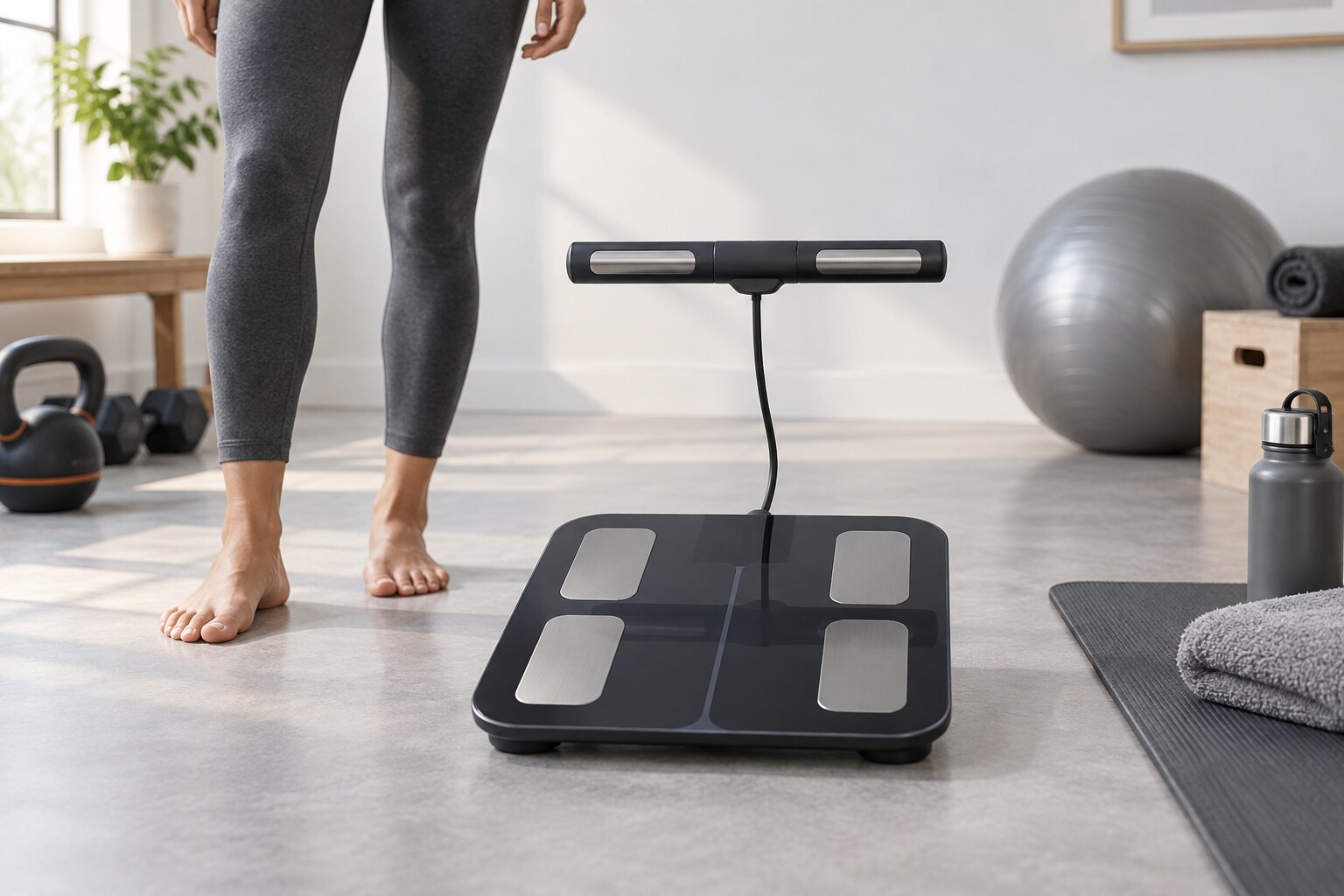
More advanced models add hand electrodes, creating additional measurement pathways through the arms and torso. Some devices can provide segmental estimates for the left and right arms, legs, torso and whole body.
The Hume Pod, for example, uses foot and hand contact points and lists 45 displayed outputs, including weight, body-fat percentage, muscle mass, visceral fat, body water and separate limb estimates.
Which Measurements Are Useful?
Body Weight
Weight is the most directly measured value. Daily changes can reflect hydration, food intake and other short-term factors rather than changes in fat or muscle.
Body-Fat Percentage and Fat Mass
Body-fat percentage estimates how much of total weight consists of fat. Fat mass expresses that estimate as a weight. Looking at both can provide more context than following percentage alone.
Muscle and Lean Mass
Muscle-mass and lean-mass trends may help during strength training, weight-loss plans and changes in sports training. The long-term direction is generally more meaningful than a small day-to-day change.
Visceral Fat and Body Water
Visceral-fat scores estimate fat stored around the internal organs. Manufacturers may use different scales, so values should not be compared directly between unrelated devices. Body-water estimates can change noticeably with hydration, exercise, meals and environmental conditions—especially in Muscat’s heat.
Why Consistency Matters More Than One Reading
BIA results are affected by hydration, measurement time and other conditions. For useful trend data, measure under similar conditions each time.
A Practical Measurement Routine
- Measure at approximately the same time of day.
- Use the scale before breakfast and after using the bathroom.
- Measure before exercise.
- Use clean, dry bare feet.
- Place the device on the same hard, level surface.
- Avoid consuming a large amount of water immediately beforehand.
Do not compare a reading taken after a long outdoor ride with one taken on a rested morning. The difference may reflect temporary fluid changes rather than meaningful changes in body fat or muscle.
Using a Body Composition Scale in Oman’s Climate
Oman’s temperature and humidity make consistent measurement especially important. After cycling, running or outdoor work, sweat loss can temporarily reduce body weight and alter estimated body water.
- Allow your body to recover after training.
- Avoid measuring immediately after a sauna or very hot shower.
- Do not leave the scale inside a hot vehicle.
- Keep the electrodes clean and dry.
- Follow the manufacturer’s storage and operating-temperature guidance.
Trends Are More Valuable Than Daily Fluctuations
Instead of reacting to every reading, review weekly averages, monthly weight trends, changes in fat and muscle estimates and relationships between training changes and longer-term results.
Hume describes daily, weekly, monthly and yearly graphs in its companion app, along with compatibility with Apple Health, Samsung Health and Google Fit. Compatibility should be checked for the exact phone and region.
Who May Benefit?
People Following a Weight-Loss Plan
Weight alone does not indicate whether a change mainly involves fat, water or lean tissue. Consistent body-composition trends can add useful context.
Strength and Fitness Users
Someone beginning resistance training may see relatively small changes in total weight while estimated fat and muscle trends move in different directions.
Cyclists and Runners
Endurance athletes can use longer-term composition trends alongside performance and recovery information. Readings immediately after hard sessions should be interpreted carefully because of fluid loss.
When a Body Composition Scale May Not Be Appropriate
Users with pacemakers or other implanted electronic medical devices should follow the manufacturer’s instructions and consult an appropriate healthcare professional before using a BIA device. Pregnancy, certain medical conditions and significant fluid-retention changes can also make consumer estimates less useful.
A home analyzer should not replace professional medical assessment, DXA scanning or advice from a qualified healthcare provider.
What to Check Before Buying in Muscat
- Foot-only or hand-and-foot electrodes
- Whole-body or segmental analysis
- Metrics displayed and app compatibility
- Supported user profiles and maximum weight
- Battery type, warranty and local support
- Data privacy and historical trend charts
Hume Pod: What Makes It Different?
The Hume Pod sits between a conventional smart scale and larger professional body-composition systems. Its handle and platform provide additional contact points, while the app presents whole-body and segmental trends. Its main potential advantage is not one single number, but the ability to follow several related trends from a repeatable home routine.
As with other BIA devices, the results remain estimates and are most useful when compared with previous readings from the same device under similar conditions.
Frequently Asked Questions
Are body composition scales accurate?
They provide estimates rather than direct laboratory measurements. Repeatability under consistent conditions is often more useful than expecting every displayed value to be exact.
Why does my body-fat reading change?
Hydration, meals, exercise, testing time and skin contact can affect BIA estimates. Focus on longer-term trends.
Is a scale with a hand sensor better?
Hand-and-foot electrodes provide additional measurement pathways and may support segmental analysis, but they do not eliminate the normal limitations of BIA.
Should I measure immediately after exercise?
It is usually better to measure under normal rested conditions because sweat loss and fluid shifts can affect results.
Can a body composition scale diagnose a health problem?
No. Consumer analyzers are intended for personal tracking and should not replace medical assessment.
Where can I buy a Hume body composition analyzer in Oman?
Explore Hume body composition devices at Atlas Tech Sport for customers in Muscat and across Oman, or contact us for product guidance.